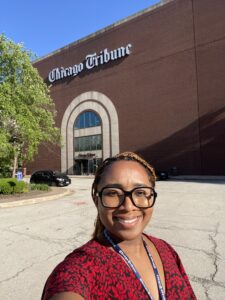
 The editing work Lauryn Azu (BA’22) did in her journalism classes at UW–Madison and in student publications continues to shape her work today. As deputy senior editor at the Chicago Tribune, the 2022 SJMC graduate works with reporters to improve their stories and get them published.
During her time at the SJMC, Azu was Editor-in-Chief of The Black Voice, an online student publication that centered the experiences of the Black community on campus and also contributed to Bell Magazine and The Badger Herald. She also took classes that gave her the opportunity to do reporting, work on stories and get valuable feedback from world-class professors.
These experiences helped Azu understand how editing can shape a story before it reaches the reader. Looking back, she sees the work she did with her student journalism colleagues as a very important step to where she is today.
“All the little experiences I was able to do in college as an editor and editing my peers’ stories led me to the point where now I’m editing other professional journalists,” Azu said.
Her classes also gave her the chance to develop stories and build relationships that went well beyond the classroom. She highlighted J202, Curb and J420: Investigative Journalism, where students work very closely with their professors and have the opportunity to spend a lot of time on their reporting. One project in particular resulted in a lasting professional friendship with her project partner Joe States, who went on to join the Chicago Tribune and is now a colleague of hers.
“There are so many benefits to being an SJMC student: scholarships, resources and people’s willingness to help and get you involved in the industry,” Azu said.
Because she works for a daily newspaper, she does not have long periods of time to edit as she did in college. At the Chicago Tribune, Azu now assists the section editors with day-to-day work, helping refine headlines, improve leads and develop story ideas. 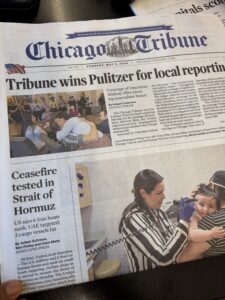 The move from student editor to professional editor has changed the scale of her work, but not the fundamental purpose of it, which is to help other reporters tell their stories.
“As an editor, I’m not as much going out and doing the reporting myself, but I’m uplifting the reporting,” Azu said.
Azu didn’t set out to be an editor at first. As she neared graduation, she was still looking for reporting jobs. Her prior editing experience helped her secure a role in another area of the newsroom. After completing a copyediting internship at the Chicago Tribune one summer, Azu received word the following summer about a deputy senior editor opening at the paper. Her experience editing The Black Voice and working on copy desks had given her a real grounding in reading stories closely. Learning AP style and helping writers get their points across were huge stepping stones in Azu’s career journey.
Although she occasionally misses the reporting side of things, she has found that editing enables her to use her strengths while helping other journalists develop as writers. She also wants current journalism students to appreciate that their editor is a partner in the process, not merely someone who corrects errors.
“Your relationship with your editor is so important,” Azu said. She explained that editors are not trying to pick apart a reporter’s work; their goal is to help bring the story to its fullest potential.
Beyond the classroom, Azu encourages students to get experience with student publications, local news outlets and professional newsrooms prior to graduation. Her internship with Wisconsin Watch gave her a good insight into the business side of journalism, particularly in terms of how nonprofit journalism outlets operate.
“It was a real eye-opener about the realities of working in journalism,” Azu said. “You have to understand not just how to do the reporting but how the newsroom works as well.”
For students still figuring out what they want to do, Azu would recommend trying out multiple different roles.
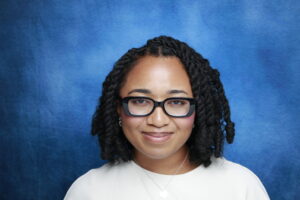 “Just try everything as much as possible,” Azu said. “ People are always going to give you the benefit of the doubt when you mess up because you’re young and you have the opportunity to work on meaningful stories.”
Taking on those opportunities also means being prepared to ask questions and learn from the feedback you get. Azu stressed that students shouldn’t assume that the moment you get an assignment is the end of the learning process, particularly in the context of an internship.
“Even as an intern, you shouldn’t be afraid to ask for feedback on a story you did,” Azu said.
That feedback can help students see what has worked, what has not and then apply those lessons to future assignments and jobs. It is one step closer to finding your niche. For Azu, a career in journalism has also meant creating relationships with people who can advise you as an emerging journalist. She wants SJMC students to find mentors and stay in touch with journalists whose experience they can learn from.
“Everybody wants to help students because we know how hard it is to break in,” Azu said. “Somebody helped me get my foot in the door, so I have to pay that back.”
That commitment goes beyond one-on-one mentoring. She’s also involved with the Chicago chapter of the National Association of Black Journalists (NABJ), where she helps to raise money for scholarships for journalism students. Her involvement with NABJ is part of a wider goal to make journalism more accessible and to ensure that more voices are included in the stories that newsrooms tell.
“That’s what really inspires me to keep working,” Azu said, “To be kind of that voice and also be able to uplift and empower different voices.”
Azu hopes to mentor emerging journalists and encourages students to reach out to SJMC alumni, who are the future of journalism.