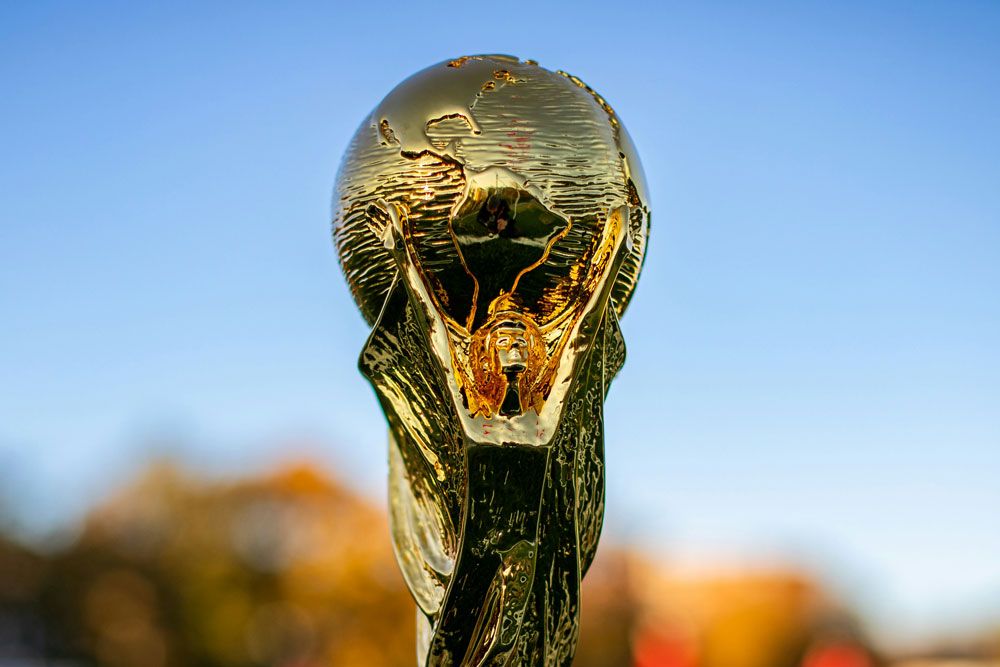
This summer, the most-watched sporting event returns, bringing its excitement to stadiums across the United States, Canada and Mexico. Every four years, fans from all over the world come together to cheer on their favorite players and enjoy the atmosphere that only the FIFA World Cup can create. As the world prepares for this global celebration of sport, School of Journalism and Mass Communication (SJMC) Teaching Faculty Matt Hermann is bringing back his summer course on sports reporting and writing, and this time its focus is the 2026 FIFA World Cup. Around the world journalists will be covering this global sporting event, and students in Hermann’s course will have the opportunity to report like professionals.
“The World Cup is the biggest sporting thing there is in the world,” Hermann said. “There’s going to be a lot of interesting stories to be written.”
Throughout the summer students will be assigned different forms of writing, all centered around the World Cup. They’ll examine how sports journalists convey compelling storylines, how to cover a sports game concisely and effectively, ways to analyze sports opinion pieces, and eventually produce sports broadcasting audio stories. Hermann said he wants to encourage students to think broadly and outside of the box when it comes to their writing.
“Some of the best sports features occasionally are about fans and fan culture,” Hermann said. “[I’m] going to encourage students both to read and discover ways that you can create new means of connecting with audiences through sports.”
While the goal is to get students to report like a professional journalist attending the World Cup, access to players, coaches and dedicated fans is limited in Madison. Hermann said he wants students to take this challenge and find solutions for their stories that center their own communities. Local watch parties, fan traditions or cultural connections to the tournament are all topics Hermann hopes to see from his students.
“Having the opportunity to give students a window into how you create interesting coverage around a tournament like this and encourage them to look into new things is very satisfying to me,” Hermann said.
Though this course is offered to current undergraduate students, it also provides an opportunity for Hermann to share his lifelong passion for soccer reporting and the World Cup. He cites his time as a reporter for the 2010, 2014 and 2018 World Cups as the driving force behind his excitement for the course.
“There is something potentially really infectious about really engaging with the World Cup, and I hope I can bring that about for some folks,” Hermann said.